Monday, March 10, 2014

Lab. 7 Evolution and Adaptations


Evolution and Adaptation

  1- Explain adaptive radiation and how the different paper forms made by “finches” helped or hurt that particular finch species.
Adaptive radiation is know as the diversification of groups of organisms into several forms. Organisms that are specialized to adapt in a specific environmental. Each new group often diversifies. The main reason that causes different prey forms made by finches helped or hurt that particular finch species 


2- With the" prey" survival data you collect, graph survivorship over time by each species.


3- Explain how behavioral adaptations may lead to genetic changes in a population.
We can see that many factors that cause different behavioral adaptation such as: climate change, and adaption to survive against competitors, predators, flexibility in the early learning of feeding skills that lead to genetic changes in a population.


4- A species that has a behavioral adaptation that may allow its predator not to be able to eat it or find it. Explain what this behavioral adaption is.
The chameleon is a small lizard wich is know for people because it can adapt to the environment. Chameleons are capable of changing color. These color changes assist the reptile to camouflage itself in the presence of potential predators. They shoot their tongue over a long a distance wich allows the chameleon to reach food.

5- A species that has a physical characteristic that allows it to survive in cold weather.
Adaptation of beavers:
Beavers have adapted to cool weather and cool water because they have a very thick skin.  which allows them to survive very low temperatures. They store food for winter time which is very long in most of places.
Available from:http://wdfw.wa.gov/living/beavers.html


6- An example of mutualism in nature. Explain what mutualism is this case
Mutualism takes place when the algae provide food for algae by doing photosynthesis and the fungi helps out by forming a protective envelope for the algae preventing the algae from drying out.

7- An example of commensalism in the nature. Explain how your picture represents commensalism.
Barnacles and Whales. The barnacles are a type of crustaceans that are sedentary, i.e. they cannot move on their own. At their larval stage, they stick to the bodies of other organisms like whales, and other places like shells, rocks, or even ships, and grow on their surface. As the whales move about, the barnacles find new habitats where food might be available.This way, they get the nutrition and transportation they need, and the whale is not harmed or benefited in any manner.
Available from:
http://www.buzzle.com/articles/examples-of-commensalism.html


9- An example of mimicry in nature. Explain what the mimicry is this case.
Batesian mimicry is the process by which a palatable animal or plant species evolves to mimic an unpalatable animal or plant. The idea is that the predator drives natural selection by learning to avoid the unpalatable species, as well as things that look like the unpalatable species.

As an example we have scarlet king snake

Available from: snakeshttp://indianapublicmedia.org/amomentofscience/batesian-mimicry-snakes/

10- One species of birds from Guatemala that has an adaptation that let it survive. Explain.
The Resplendent Quetzal primarily is frugivorous,  it means that they just eat fruits and plants. Some times they will hunt insects or lizards for feeding their babies. The quetzal one of the most beautiful and endangered species in Guatemala has been adapting to the cost change in the local weather.


Saturday, March 1, 2014

Sunday, February 9, 2014

Lab No. 5

Seedling Germination

INTRODUCTION:
This experiment will let us observe the effects of germinating seeds in the light and in the dark. Also this experiment will show how important water and sunlight are to helping a plant grow to its fullest potential.
 
      What was our control for this experiment?
What we did for controlling this experiment was measuring the germination and growth of total plants. Using radish seeds planted under two conditions light condition and total dark condition. What we did in groups two for light condition. and other two for dark condition. Based in our hypothesis was plant 4 seeds per cup in a tray that have 36 cups . We planted two weeks ago, after that period we analyzed our experiment by counting and doing some math.

2-   What is the percent germination for light treatment? For dark treatment?
we measured our germination percentage by doing some math the following formula was used:
Percent germination =(total number of seeds germinated    )/(total number of seeds planted)*100
                                   
 x=68/144*100                                   
 x = 48% for light treatment
                                 
 
x=48/144*100
x = 34% for the dark treatment
 
3- Make a graph of a total germination percent per treatment.

 
 Height average between light and dark treatment.
 
 Weight percentage between wet and dry plants.
1-    Compare the difference in appearance in the dark treatment and the light treatment plants. If there is a difference in appearance, explain.


Seeds planted in light treatment were very green and some of them were curly, it might be because they were compiting for sunlight. While seeds planted in dark treatment they were yellow and very week their leaves were dropping down  almost to die.
 
2-If there was growth in the dark treatment plants, explain why that growth may have taken place even though light was not reaching the plants. Most of plants only need soil and water in order to germinate. there has been some research done that says that some plants can grow even without sunlight but it is in a slow rate.


3-    Using your calculation of class’s data, draw or make three graphs, showing the differences in respiration(R) net primary productivity (NPP) and gross primary productivity (GPP) between light and dark treatment. Titles your graph label your x and y, and make sure your treatment are clear in each graph.
 
References:

http://www.newton.dep.anl.gov/askasci/bot00/bot00333.htm

http://www.ehow.com/info_8104036_plants-growing-dark-science-projects.html


Monday, February 3, 2014

Lab no. 4

Trip Field Report about:
"Succession" and "Marmot Dam Removal"
 
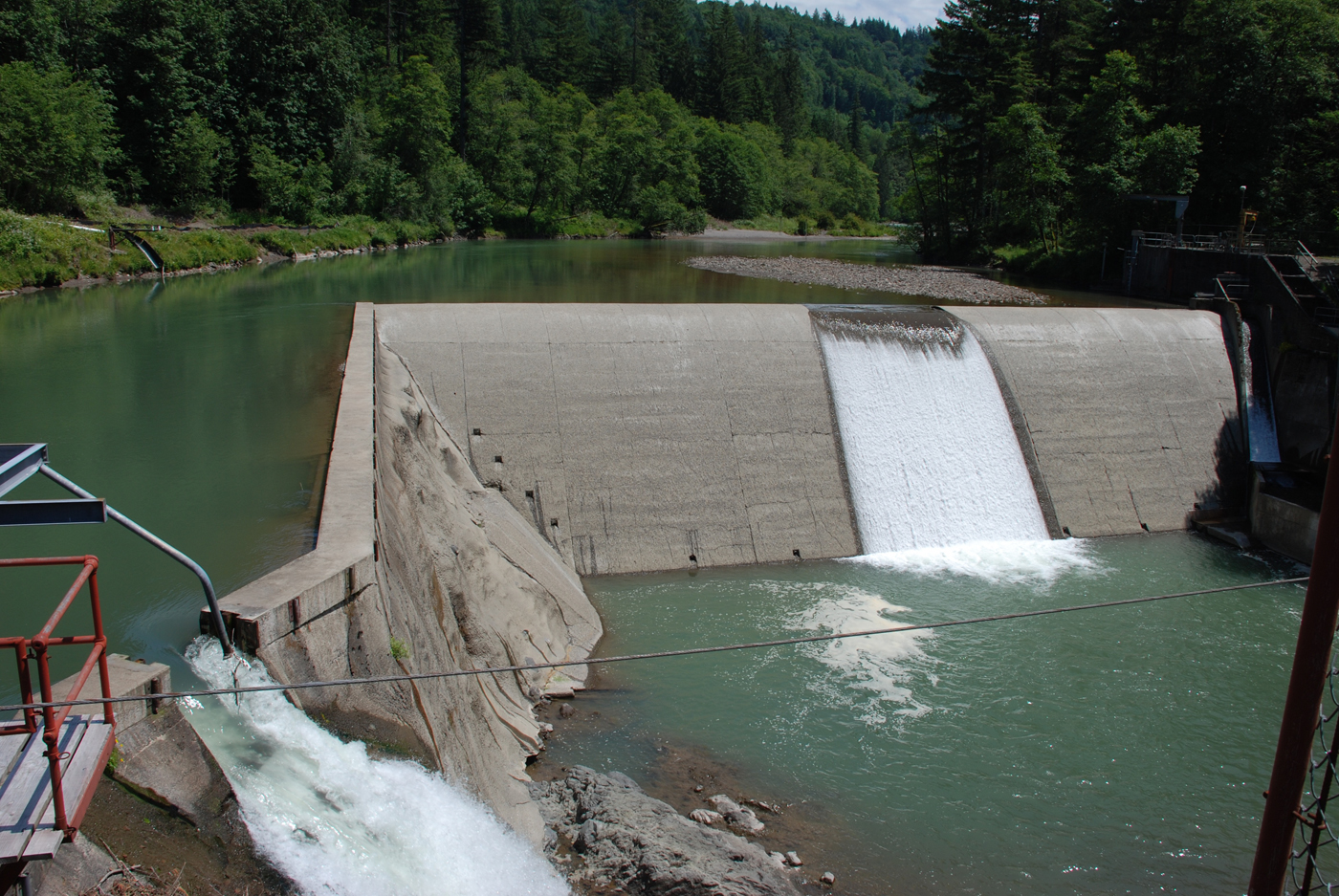
Marmot Dam on Oregon’s Sandy River was removed. Portland General Electric in 2007 removed Marmot Dam, which was part of the Bull Run Hydroelectric Project. In November of 1999, PGE filed a notice not to look for a new license for the Bull Run project near the city of Sandy. PGE decided that it would not work for them to meet current standards for protection, mitigation and enhancement of the natural resources affected by the project especially salmon on the Sandy River.
 
The Bull Run project was located about 30 miles east of Portland on the western slopes of Mount Hood, and consisted of:
• Marmot Dam, a 47-foot-high, 345-foot-long roller-compacted concrete dam that was built in 1989 to replace an earlier timber structure.
• Little Sandy Dam, a small concrete diversion dam on the Little Sandy River.
• A complex system of connecting canals. 

Yards of sediment — silt, gravel, cobbles and boulders — had accumulated behind Marmot Dam during its lifetime.


Photos courtesy of Portland General Electric

Marmot Dam was a 345-foot-long concrete dam built in 1989 on the Sandy River.
Involving 23 governmental and nonprofit organizations and several years of effort, PGE committed to remove the dam extracting only as much sediment as was required for the demolition. The remaining sediment would be allowed to disperse with natural stream flow. 


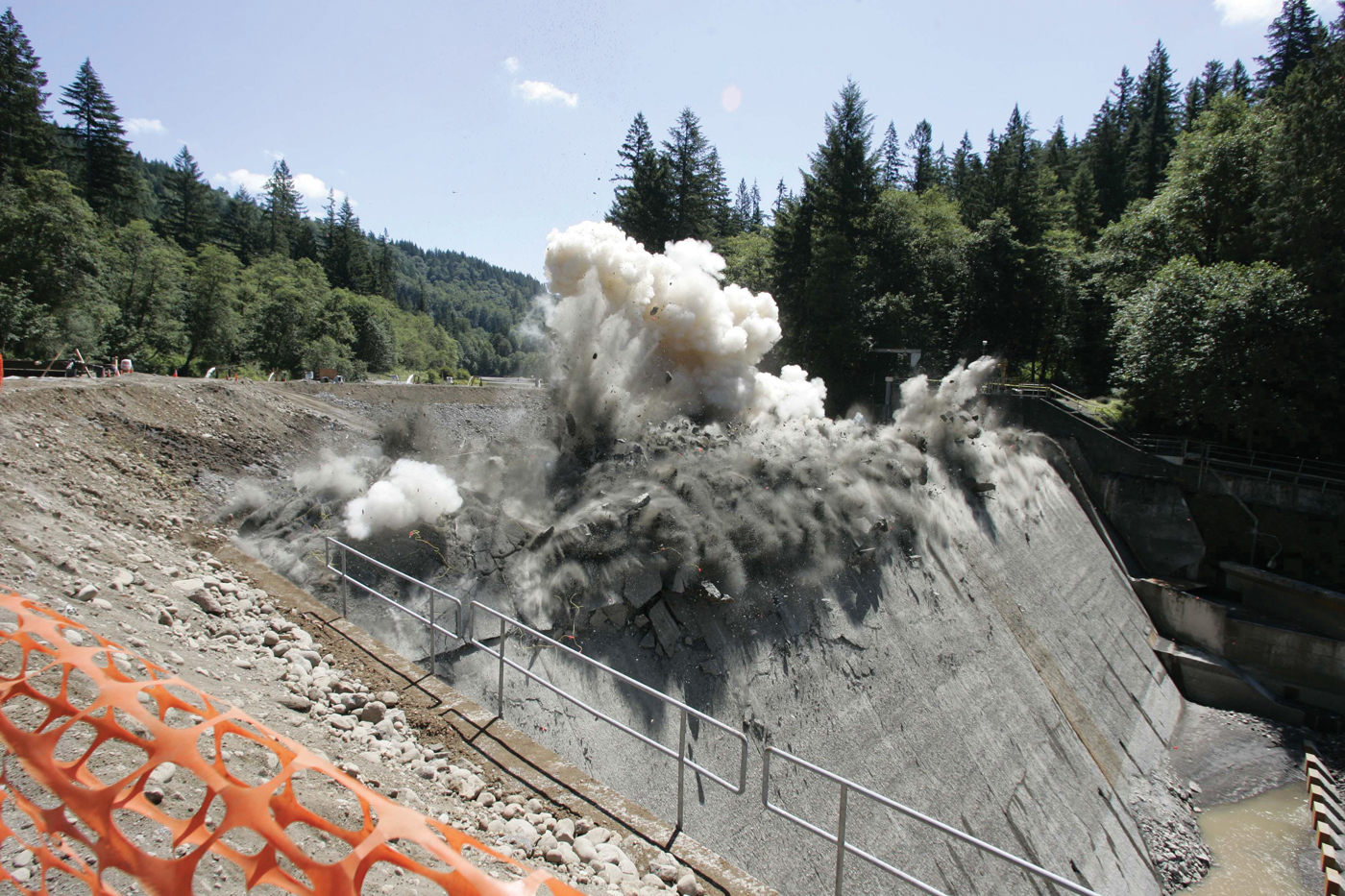
The dam was fractured by drilling, and then controlled blasting.

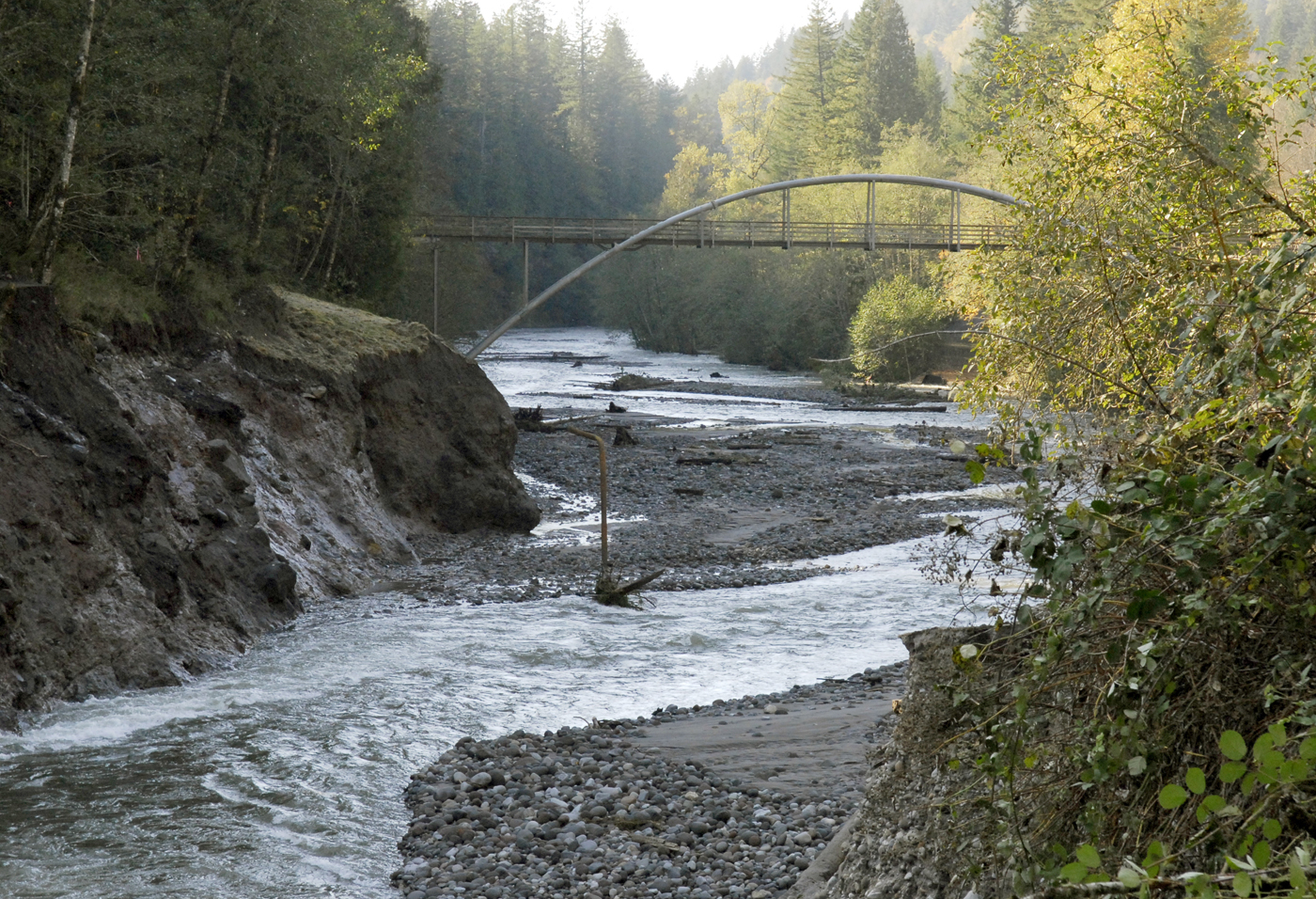
After the dam was removed forest is recovering slowly. There are Big leaf Maple and Red cedars also Sword Ferns grow on the ground. trees are around 200 years. While in the entrance side we can see that second succession have been taking place on the past years. When the dam was removed the sedimentation went a way just by nature. Then salmon can flow upstream. there were benefits that this process brought.
a bridge is left people is visiting that historical act. biking and hiking activities are been developed by Oregonian now days.


The view downstream after the dam was removed.


Here is a link to a video to see the removal process and detailed.
http://www.opb.org/programs/ofg/segment/marmot-dam-removed/


Lab No. 3

1. What wording used in a popular science article (magazine, website or newspaper article) Would lead you to believe it is based on a peer reviewed article? List 3 or 4 more statements below the example statement.

1)  The Ixil University did a research about.....
2)  National Geographic wrote an article about endangered species....
3)  Scientist turn to satellites to save Guatemala's Jaguars...
4) according to University of Colorado fired has consumed....
                                                  
2. Find a popular magazine, web site, or newspaper article

William A. Saturno, May 2012, Ancient Maya Astronomical Tables from Xultun, Guatemala, Science. (Internet). Available from: http://www.sciencemag.org/content/336/6082/714

picture missing
                            

 3. Find a popular article related to your country's ecology

Paradise Lost

 
This article is about a writer that visited my country Guatemala. He describes how he enjoyed and visited places that he never seen before. What I really like about this article is that he wrote all his adventure and at the same time he is describing each one of the places that he visited. Just to give one example the Atitlan Lake. It is one of the most famous like in Guatemala in its west side we can appreciate two wonderful volcanoes. This Lake is known as "El ombligo del mundo," translated it would be like the bellybutton of the world. Also Maynard wrote about how the culture is connected to the nature. His hiking experiences on Volcanoes in the highland side of Guatemala.

Source:
Joyce Maynard, May 14, 2012 Paradise Lost, Talk. New York Times. (Internet). Available
 
4. Find a peered reviewed article of a similar topic than the popular article to your country’s ecology
 
 
Scientists Turn to a Satellite to Save Guatemala's Jaguars
This article describes very detailed one issue that Guatemalan Jaguars have been facing. Since this article is from almost 10 years this topic has been more relevant this past years. The jaguar is very significant animal for our Mayan ancients. But these days the jaguars are losing their habitat. There are one of the endangered of extinction species. A team of scientists are hoping to manage this issue by using a Global Positioning System satellite to track the movements of these animals. I was very interesting in this article because I think and I want to save this unique Guatemalan specie in a certain point.

Missing picture,
 
Source: 
Reuters, May 22, 2005, Scientist Turn to a Satellite to save Guatemala's Jaguars, New York Times, (Internet) Available from:
http://www.nytimes.com/2005/05/22/international/americas/22guatemala.html

Friday, January 24, 2014

Lab No 2

I am always exiting about topics that leads with Agricultural and Reforestation activities.  I strongly believe that Ecology of Tropics Information Class fits with it. It can help my to learn and understand how the environment works. How different kind of climate has to do with Agriculture in a tropical area.  how every single thing, no matter how big or small in can be all of them are connected. I hope this class will help in a right way to develop my community.

My community is surrounded by mountains and rivers. One of the main problems that my community has been facing is river pollution,. we have been polluting our rivers with all kind of waste and sewage. At a point that nothing of this water is drinkable.

Since I arrived to Oregon I have been exposed to very interesting and useful activities and classes. I learned about composting and gardening and recycling activities. I think these kind of things can be developed in my community in order to reuse things in a wisely way.


Ecology in Guatemala

Tropical Ecology- May,2012- Belize and Guatemala. Available: http://www.youtube.com/watch?feature=player_detailpage&v=dTt42GjYXQM


Guatemala is a small country which is home to 19 different ecosystems, ranging from the mangrove forests on both Pacific and Caribbean coasts to the pine forests of the mountainous interior, to the cloud forests at higher altitudes and to the sub tropical jungle at lower altitudes.(1)
Guatemala: Flora and Fauna. 2007 Guatemala. Available from: http://www.travelingguatemala.com(1)

 This magazine describes how people worked and developed hiking and other activities in a town which is closed to a death volcano.
Chicabal Lake Volacano Ecology in Guatemala. Dec. 14, 2013. IMMERSION TRAVEL. available from:http://immersiontravelmag.com/blogroll/?p=147

The jaguar is very significant animal for our Mayan ancients. although these days the jaguars are losing their habitat. A team of scientists are hoping to manage this issue using a Global Positioning System satellite to track the movements of these animals.(2)
Scientist turn to a satellite to save Guatemala's Jaguar. May 22, 2005. The New York Times. Available from: http://www.nytimes.com/2005/05/22/international/americas/22guatemala.html(2)


This article is about a project that has been running to promote Eco-tourism in the Maya Biosphere Reserve, a protected area that has natural parks and archeological sites which are threatened.(3)
Guatemala ecology, archaeology threatened.  May 29, 2012.  Dear Kitty. Some blog Available from:https://dearkitty1.wordpress.com/2012/05/29/guatemala-ecology-archaeology-threatened/(3)